Scott Moe reflects on 2025 and looks ahead to 2026
December 22, 2025, 11:54 am
Nicole Taylor, Local Journalism Initiative Reporter
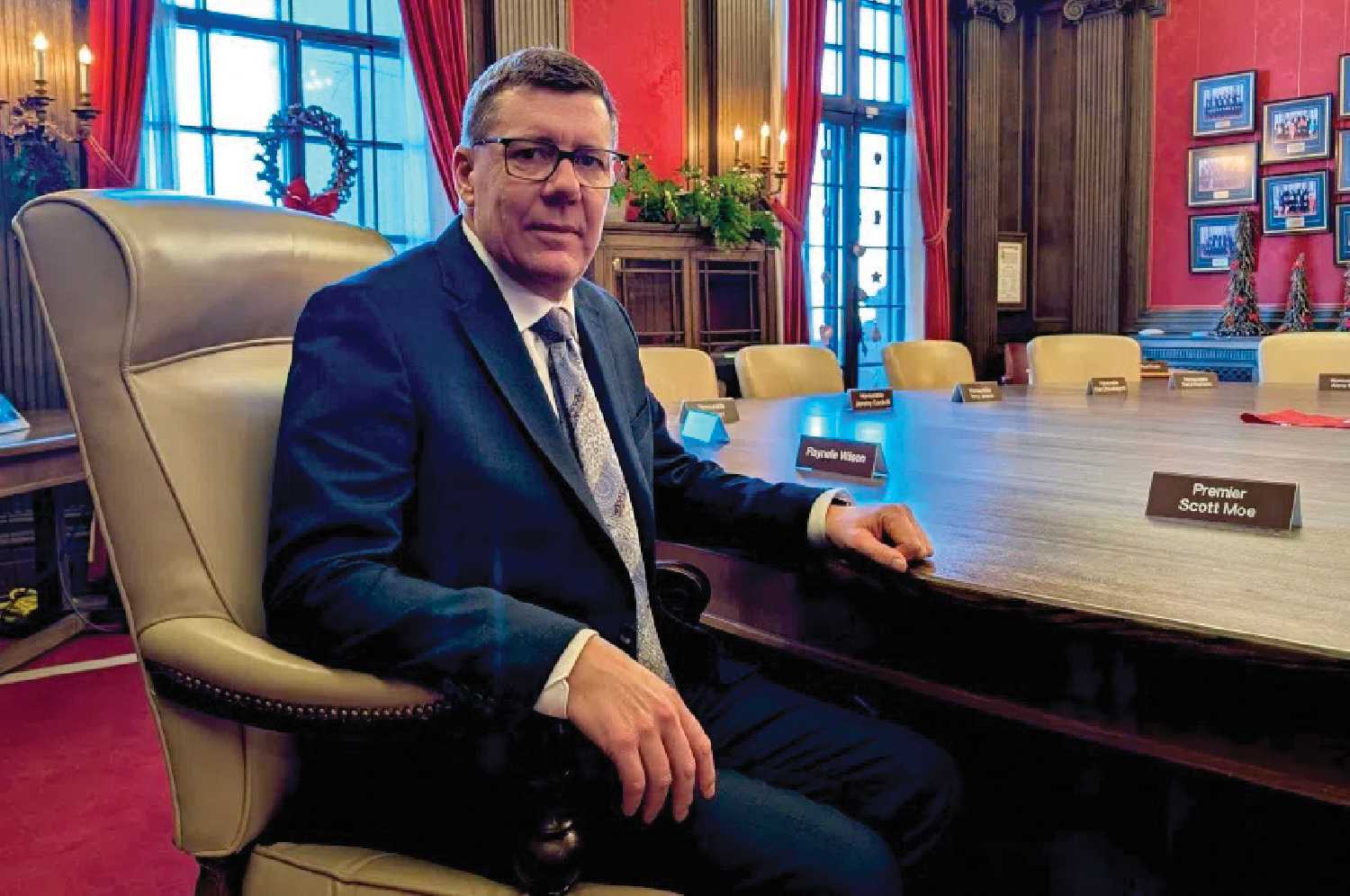

Over the next few weeks we will be running interviews with provincial, federal and local leaders looking back on 2025 and looking ahead to 2026.
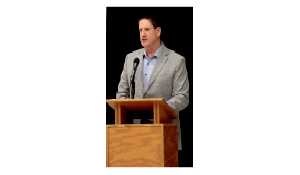
We spoke with Premier Scott Moe on his reflections on the year past and the year ahead.
What were some of the biggest challenges our province faced in 2025?
We have faced challenges on all fronts, whether it be international, national, or within our province here as well.
International trade relationships and trade challenges have a big impact on Saskatchewan as we export our products all over the world.
There have been tremendous challenges on the national stage across Canada, election fortunes across the country changed every which way you can imagine this past year. And certainly, within the province we generally a had a good crop, in some areas not so good, and a tremendous fire challenge in some northern communities as well.
We saw a lot this past year, and thankfully we live in a place where people are resilient and we certainly look for a better year next year.
Do you feel the province adequately tackled those challenges?
There is always an opportunity for us to do more, and to look back with an eye to learning on how we can better support Saskatchewan communities and families as a government, and make strategic investments that are supportive of our communities across the province.
So there is no doubt that we can do better as a government and we always strive to do better.
We look in the rearview mirror to the extent of how do we improve on whatever we were faced with the next time we are faced with it.
What was the most unexpected thing the government had to deal with in 2025?
I think the most unexpected thing is the international trade challenges that we are having. I don’t think anyone could have predicted the ferocity with which the president is changing global relations, not just with a country or two, but with many countries all at the same time, and the direct and indirect impacts that is having on what has traditionally been an ally nation, like Canada.
For a province like Saskatchewan that is very much focused on exports for our wealth and our jobs and opportunity, it certainly is having an impact on us. I think that would have been hard for anyone to predict.
What legislation are you most proud of that was brought forward this year?
There are a number. I think that the Compassionate Intervention legislation is going to be a significant piece of legislation to help individuals that may have fallen into a life living in addiction and help families, and have an avenue to support their loved ones that have fallen into that life of addictions.
So there will be much discussion about this piece of legislation as we find our way into the spring, but I think it will be yet another tool in providing that access to a recovery lifestyle that this government is intent on providing.
Trade issues have impacted our local businesses from Agriculture, to energy to mining to manufacturing. Our local industries are dependent on exports, What is the long-term solution on trade for a trade dependent province like Saskatchewan?
The ideal long-term solution is a re-implementation of some type of tri-country trade agreement like USMCA. Which was formerly NAFTA. That would be the ideal situation. As we find our way through between now and then, it would be our hope that we have as much non-tariff market access for our product as possible, whether it be the manufactured goods coming out of our province, and coming into our province as well.
As goods flow in, if they are tariffed they are just going to cost you more and US tariffs are costing Americans more each and every day.
So in the near term, we are going to have to likely rely on supporting our federal governments in any agreements we have, whether it be sector by sector to find our way to that broader either bi-lateral or tri-lateral agreement in North America, and then hopefully corresponding agreements in other countries around the world. Most notable among those would be China and India.
People in the Moosomin area see the need for a CT scanner here and there are needs for investment in our medical system across the province. How does the province determine where those investments go?
We work with the communities on where and when those investments look like they make sense and for example, a CT service in Moosomin may look different than what that similar service might look like and how it’s offered in a place like Melfort, or Prince Albert or Saskatoon or Regina.
Some of that will depend on input from the medical community, some of it will depend on input from the locally elected community leaders, and some of it obviously has to depend on the data and that will be part of that conversation as well.
When you start having these discussions and are very active in the space in providing that service in Moosomin, there can be some opportunity I would say for the localization for that service, how it’s be provided, to what level it is being provided, where and right down to who ultimately is operating and how it is operating into the future.
They can be very localized discussions and I think in Moosomin in fairness that is the case.
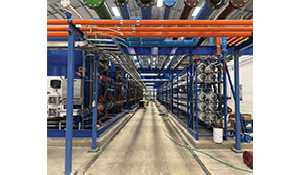
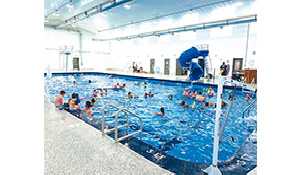
We did see significant investment in this area by the province this year with extensive highway work on Highways 8, 1 and 48 and the new truck stop east of Moosomin, a new long-term care facility under construction at Grenfell, a new daycare in Moosomin, and more than doubling of the ICIP funding for the new indoor pool in Rocanville. We have the new $10.6 million airport at Moosomin, and you were in Moosomin this summer to open the new $13.5 million water treatment plant in Moosomin. Why has there been so much investment in the Moosomin area and in Southeast Saskatchewan.
It’s a growing area and it is also an area that is generating a significant amount of export based revenue, whether it be in the mining sector, the oil and gas sector, whether it be in the agriculture sector.
I remember over the past few years having discussions on the expansion of the airport. We had discussions with respect to the fed provincial municipal infrastructure dollars that were being invested as well.
It is very much a growing area, not just in terms of people but also in terms of the economic output that is coming out of that particular area and I think that the corresponding investment has followed. The province is a partner in a number of those project and you can name many.
Quite often, almost exclusively, the initiative comes from the local community, from people that are putting this initiative forward and then putting some effort behind it, whether it be local fundraising or whatever that might be. Municipal infrastructure projects are initiatives put forward by the local municipal government.
The airport project was one that was put together by a number of people who saw the benefit of connecting Moosomin to the global community by air.
When you look at the CT scanner conversation that we just had, that was a combination of people in the medical community and residents that said we need this service here and started to put forward a plan on how to acquire and operate that service into the future, so the province is often a financial partner and we get to come out for the ribbon cutting, but the true credit goes to people that live in the community for bringing the initiative forward in the first place, because without that, it just simply wouldn’t happen.
We have a new MLA serving our region of the province in Moosomin- Montmartre. How does he represent the local interests in Regina?
Very Well. Kevin Weedmark is a very strong voice on all of the committees that he serves on, as well as throughout the governing caucus and on the very floor of the legislative assembly.
I think all those who know him would agree when I say that his unending and undeniable energy is infectious with others as well. As Kevin has a real ability, not only to represent his constituents, but to represent virtually all he does in a very positive way, which is very infectious among his colleagues and among other sthat he works with here in Regina as well.
Myself, and our caucus colleagues are very aware of the growth currently happening and the potential in the Moosomin-Montmartte riding, as well as very aware of how we are going to address some of the challenges of that growth for years into the future.
We are working on that today and the long-term care space in the daycare space and others, but there is more that needs to be done in the future and the people living in the Moosomin area can be very confident that Kevin is bringing their voice to the Saskatchewan Legislative Assembly.
Drugs have become a scourge across the province, what is the province doing to address the drug crisis?
First is if we can agree on the fact that the streets is the most vulnerable place for an individual to be if they have found themselves in a position where they don’t have a home or unfortunately may have found themselves living a life of addictions.
We don’t want them on the street and I don’t think they want to be there. It’s a vulnerable place.
Let’s make a recovery journey the opportunity for them. We need to provide capacity and we are doing that , building our a target of 500 recovery beds, I think about 300 of those beds are up and running as we speak. We need to get to 500 as soon as possible an likely we’ll have to go beyond that.
Second is to build access points so that we can meet people wherever they are in their journey so that they have that opportunity to access one of those recovery-oriented services.
Third is we also need to keep the community safe, and drugs away from those who are unfortunately living that addictive lifestyle.
We have to keep our broader community safe for the population and everyone that lives there. We should aspire to have every community be a community where a family can go to the park after supper and not in any way feel unsafe.
The way to do that is to have enforcement and officials that have the tools to keep the people that are doing bad things away from those families.
The next steps are to follow up on the investments we have made in the enforcement space, whether it be the 100 new municipal officers, the 180 new RCMP officers or the 70 marshals.
To ensure that they have the legal tools to keep our community safe and I would say that much of what we see in the way of crime and criminal behavior in our communities are driven by people that are supporting a life of addictions.
Let’s start discouraging that life of addictions, let’s start taking the drugs away. It is illegal to have drugs on your person and now with the street weapons act, it is illegal to have drug paraphernalia on your person as well and starting with our police officers enforcing just those laws, not necessarily criminally charging those in possession of drugs, criminally charging those who are dealing drugs but for those that have drugs, let’s just start taking drugs away.
Our aspirational goal is to have a community where a recovery lifestyle is the option that lies before you, and our aspirational goal is to have a province where drugs are not available. That might not be realistic. However, it is one goal that we are going to make every effort to find our way to—take the drugs away and provide recovery oriented system of care and an opportunity for everyone that is unfortunately living a life of addictions to find their way to a life of recovery.
What were some of the most important things you feel your government accomplished in 2025?
In 2025, I think that one of the things that has really come to light is the effort that Saskatchewan has made in the space of building our international relations. W were able to be the first province, myself the first premier, in China in six years, to bring Canada and China back to the negotiating table.
To the advance the opportunities that we have to bring Canada and India to that very negotiating table.
The highest ranking trade diplomat in India over the course of the past year has been the Saskatchewan Trade Commissioner because we have been committed to building those trade relationships even when times are difficult, to ensure that we are able to help and to lead Canada back to these very negotiating tables.
We did the same in Mexico, and just recently a few weeks ago we were down in the United States meeting with a number of Presidents Trump’s cabinet. As you know, Canada and the US are currently not at the negotiating table.
It was our goal and our hope that our visit would in some way precipitate Minister Leblanc and secretary Lutnick to return and start working towards either a reinvigorated USMCA agreement, or at least finding a way to negotiate away some of the current trade unrest that we have.
I think that is the most significant piece over the course of the last year is the commitment that Saskatchewan has had in the international space and how we are working to lead Canada to a better space in those negotiations.
Why is that important is probably even more impactful than the story I just told.
Without the strength of that economy we are able to make that investment in the CT scanner in Moosomin.
It’s only through that strong and growing economy that is reliant on those export based industries, that we are even able to have those discussions about a new long-term care facility in Grenfell.
We have the investment dollars available because of the strength of the Saskatchewan economy.
So that’s why I say it matters so much, because all of those investments that we talked about that are so important to folks that live in Grenfell and Moosomin are only possible because we are able to capture top dollars for the potash and the grain and the oil that is flowing through and being produced in your community as well.
Looking ahead to 2026, what do you want to see accomplished?
I hope that the choppy waters that we are seeing in the trade related environment are short lived, because the medium to long term view for Saskatchewan when you look at the food, fuel and fertilizer that we produce is very strong.
The world needs it and we have it, and we are in many cases an ally, a trading partner and should be looked at as a preferred long term trading partner.
I think that if we are able to get through this tariff discussion in 2026, the North American economy will be in a better position as well as the Canadian and Saskatchewan economy.
That brings us to a very strong position in Saskatchewan with the coming on of a new mine at Jansen, the BHP mine, maybe two or three uranium mines coming on, a copper mine coming on, as well as a number of canola crush facilities that we see starting to come online.
I would hope there are some additional investment in the oilfield space given that be the MOU signing between Alberta and the federal government, for some of the opportunities that we might be seeing more locally. I think the medium to long term opportunities for Saskatchewan are great.
I am hopeful that in 2026 we will be able to get over some of the short term, tariff related, trade related challenges that we had to endure that so we can get back to ensuring that communities like Moosomin, like Grenfell and others are able to make those investments in healthcare, make those investments in our friends and family members and community members that may have fallen into a life of addiction to ensure that Saskatchewan truly is the best place to live not only today, but the best place to live into the future.
What are some of the most challenging things about your job as premier?
I would say that each and every one of us, in whatever we do in this province have challenges each and every day, and this job would be no different.
We have difficult decisions that come to my desk and to the governments desk almost on a daily basis. It often isn’t a choice between a good decision and a bad decision, but a choice between two pretty good decisions but you only have the ability to do one.
So that part is challenging, here’s the part that isn’t; I have a lot of faith in the people that I get to work with each and every day, some are elected, some are not.
Whatever that decision is that particular day, I have faith that we have the people in the room that are going to have the discussions that are going to ensure that given the information we have, we are going to land at the best decision.
I have faith in that, and that gives me a lot of faith when I go out and start talking about whatever that particular decision is.
An example of that would be the introduction of the Compassionate Intervention legislation this fall that didn’t just drop from the sky, that came from many, many conversations that the ministers, myself and other have had, with family members, with police officers, with the legal community with the physician community, the medical community, but also with just people myself and the people Iwork with know.
It’s finding its way forward because of the faith that this government has, not only in one another but also in the people that we regularly talk to every day. So challenging decisions, I think it’s fair to say that all of us in anything we do have challenging decisions each and every day,
I am in the very fortunate place where i just have a whole lot of faith in everybody, including Kevin Weedmark, that I get to work with each and every day, in making those decisions and I am thankful for that. I think that is something we can all think about this holiday seasonal and this Christmas season, is what exactly is it that we are thankful for in life.
What are some of the most rewarding things about your job as premier?
The people. The people I get to worth with, the people I get to meet, and ultimately the people that we represent across the province.
It doesn’t mean you always agree with each and every one of them, but they and others have a reason for the beliefs that they have. We all too often being an elected represented, people say you maybe put up with a lot of things that others say about you but the fact of the matter is you get to show up at a community when that community is at its very best, when they are cutting a ribbon for a new long term care home, or a school, or an infrastructure project of some type.
The rewards are many in this position, whether you be an MLA, Minister, or the role that I serve in as well, but it’s always about the people.
I said earlier about the investments into Moosomin and area, they would never happen and the province wouldn’t be part of them if there weren’t local people that were taking the initiative to push those projects forward and it’s precisely those people that we get to meet each and every day and it makes this job certainly the most rewarding job that I’ve ever had the honour to have.