Relief as canola tariffs lowered after China trip
January 19, 2026, 8:23 am
Nicole Taylor, Local Journalism Initiative Reporter

There was relief among Saskatchewan producers last week after it was announced that Chinese tariffs were being lowered on canola. The announcement came during Saskatchewan Premier Scott Moe’s and Prime Minister Mark Carney’s trip to China last week.
Carney said he expects China will lower tariffs on canola seed by March 1 to a combined rate of about 15 per cent—a drop from current combined tariff levels of 84 per cent. China is a $4 billion canola seed market for Canada. In exchange, Canada will slash tariffs on Chinese electric vehicles.
“It’s very welcome positive news for all canola and pea producers in the province who have been patiently waiting for some news like this, giving us some optimism going forward,” said Bill Prybylski, President of APAS Friday.
“There has been so much uncertainty from the first announcement of the tariffs almost a year ago and the pressures that farmers have been dealing with in terms of the lower commodity prices and where are they going and how long are these tariffs in place—so to see some clarity going forward is certainly some relief.
“On the other side we do know there is still work to be done. There are still tariffs on canola oil and tariffs aren’t gone completely, they have just been reduced on canola seed, so there still some work to do.”
Prybylski says the impact of the tariffs on producers has been both economic and emotional.
“There are two sides to that, there is the economic impact which has been huge. It’s hard to put an exact dollar figure on it because there are so many other factors that have affected the prices of our commodities. But certainly the tariffs had a big impact on those prices and they were quite significant. And the other side is just the attitude and mental wellbeing of farmers and dealing with these tariffs knowing there is nothing that we have done wrong but we are having to pay the price for all this. So there is certainly that aspect to it that will hopefully be alleviated going forward.
“Not only the tariffs from China but our input costs were pressured upward because of tariffs from other countries, particularly the United States, so certainly the talk of tariffs and trade have been top of mind for most producers. It was definitely tough on a lot of guys just trying to figure out what the effect of all these tariffs are going to be and what are our plans going forward to mitigate some of that risk that certainly was brought on because of the tariffs.”
Prybylski says producers were optimistic when they heard Moe and Carney were heading to China together.
“I talked to a few folks and they were very optimistic about just the fact that the prime minister was there and that the premier was accompanying him was a good sign that there was going to be some movement and some relief from the tariffs. There was also a lot of skepticism that this was just a photo op, that maybe they would be setting the ground work for future talks, but to have some movement on the tariffs is certainly welcome news—it surprised some.
“We’ve been dealing with these tariffs for almost a year now so it’s about time something was done.”
Tracy Broughton, Executive Director with Sask Oilseeds, says they were hopefu when they saw Moe and Carney were heading to China together.
“We were quite hopeful, actually, and to be honest we were trying to temper our expectations because the relationship between Canada and China have been tenuous for the last a decade or so. It has been a year since the tariffs and there has been a lot of pressure on our farmers.
“Discussion has been moving very fast so we’re hopeful, we are cautiously optimistic and we’re feeling pretty positive about the reduction in tariffs. Of course we would like it to be zero per cent, but at the same time, it’s significant progress on the file and I guess the market will tell us if that’s what it needed to start moving canola and the export market a little bit more swiftly.
“It’s a pretty big sense of relief for now.”
Broughton says they have already seen positive market movement since the announcement.
“The market this week have been responding positively already and prices seem to be strengthening. I think that’s really helpful for farmers who are going to be moving canola in spring to get ready for clearing out some of those bins. I know there was a lot of pressure and concerns for farmers who haven’t sold their canola and still have seed in the bin. This is the time of the year when farmers start planning for the upcoming crop year and they’re going to be having to pay for some of the inputs that they’ll be needing for the new crop year, so cash flow becomes really important in January.
“The tariffs were causing a lot of discomfort. Uncertainty always does. And a lot of farmers I know, they have experienced dealing with weather-uncertainty and they know that’s out of everyone’s control. I think this one is very political in nature. That always brings a lot of emotions and there was an inability for people to have any direct impact on the issue and so that causes a lot of stress and anxiety.”
While Broughton is happy to see tariffs lowered, she’s even more hopeful for a tariff free environment at some point.
“We would like to see a tariff free environment—zero tariffs. It wold be great to have some sort of bilateral trade deal. We would like to see open access to any export market that brings or that would like to buy our farmers’ canola.”
Broughton says she was impressed by Moe and Carney’s leadership on the issue.
“I’d like to call out the fact that we are very happy to see a strong relationship between our provincial government and the federal government. Premier Scott Moe has shown a lot of leadership on this file and advocated very hard for canola farmers and we’re very appreciative of that leadership and we’re also very thankful for the priority that Prime Minister Mark Carney has put in our sector. It is a $43 billion industry and very important to the Canadian economy, and sometimes in agriculture, we don’t always feel recognized by the federal government and so I think this demonstrates that they do see the importance that agriculture provides to the economy. I was just looking it up the other day and it’s seven per cent of the national GDP, so it’s very important industry.”
Moosomin-Montmartre MLA Kevin Weedmark said Saskatchewan has pushed hard to promote trade, and the lower tariffs are a win for the province.
“Our Saskatchewan government has always promoted trade,” he says. “We have a network of trade offices around the world, we have done many, many trade missions around the world and laying that ground work and doing that hard work ends up with results like this. This didn’t just happen, this is the second time the premier has been in China recently (Moe visited China in September). I know that the hard work the Saskatchewan government has done on the trade file has led to results like these.
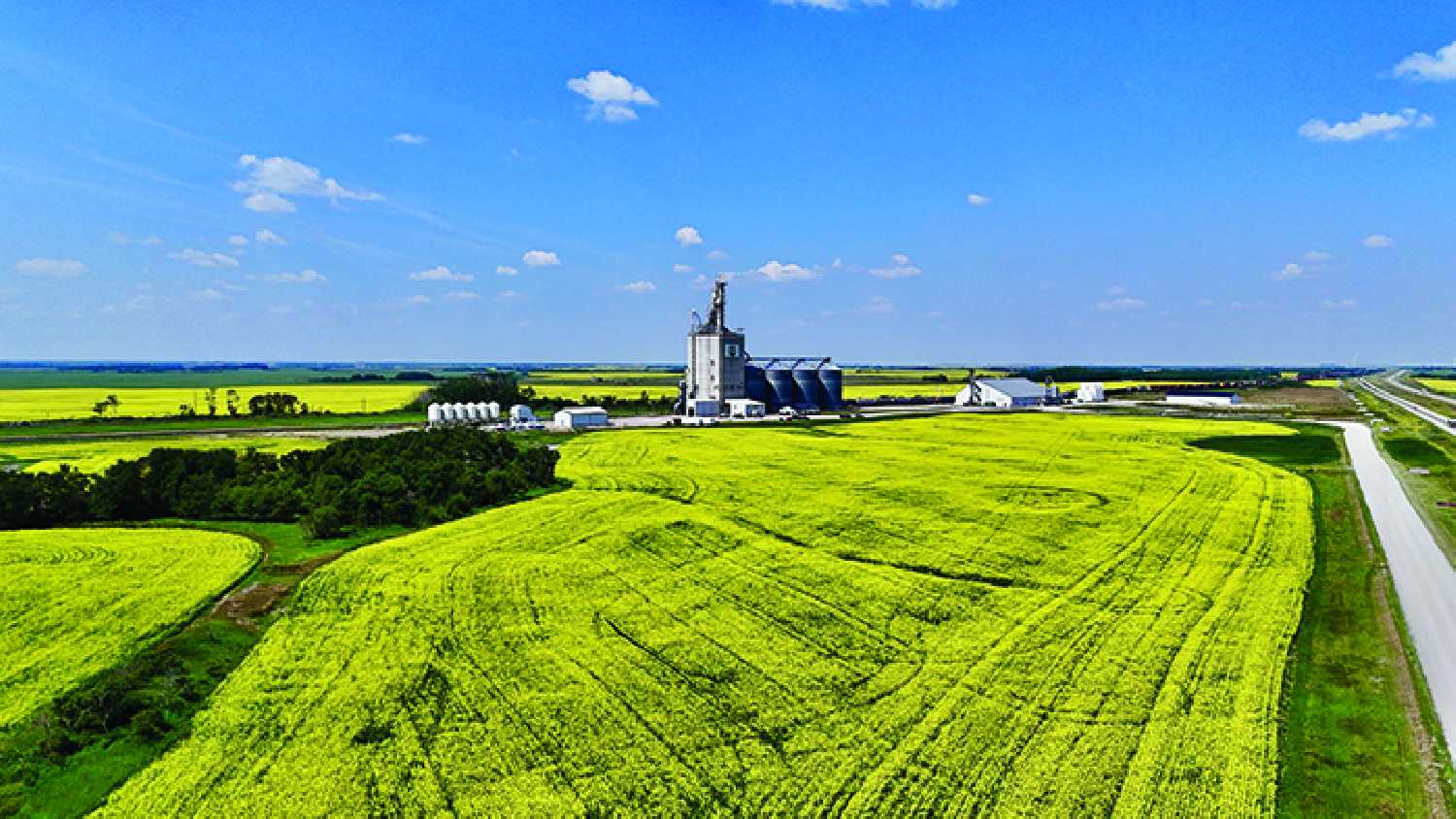
“It’s thanks to the leadership of Scott Moe and the government of Saskatchewan that this is a win for all of Canada and we’ve seen this consistently that this province leads the way on trade and there’s a reason for that. First of all on the canola issue, it’s vital to this province. If you drive around our area the province in the summer, those yellow canola fields define the landscape in the summer. It’s of vital, vital importance and that’s why the premier and our government have made it a priority for us is to work on these tariffs, and that’s why there’s been a lot of work behind the scenes and a previous trip by the premier to China, so there’s been a big focus on that.
“But overall, our area of the province, and our province as a whole, is focused on trade. Look at our industries around here, our manufacturers, places like IJACK, they ship items all around the world. Our agriculture sector, it ships its products all around the world. Our energy sector, much of our energy is produced for export. And our mining—potash—mining, those products are produced here and go around the world.
“So we are a province that’s defined by trade. As a matter of fact, Saskatchewan had the second largest exports per capita in all of Canada last year. That tells you how dependent we are on trade and why trade has been a focus of this government and why Scott Moe has made it a particular focus.
“The opposition NDP has criticized us for having trade offices. They said that they would close those offices. The opposition NDP has criticized trade missions— rade missions that result in things like a much better deal for canola producers. They have criticized those missions very often as junkets or as unnecessary.
“But that hard work, laying the ground work, setting up those offices, doing the hard work—that leads to successes like this. This is a win for Saskatchewan, this is a win for Canada, this is a win for trade and the economy.
“I just want commend premier Scott Moe on his leadership on this issue. He is not only leading Saskatchewan but he has provided leadership that has benefited the entire country in this case.”