From small Saskatchewan farm to Budweiser’s lead horse
March 30, 2026, 11:36 am
Donna Beutler
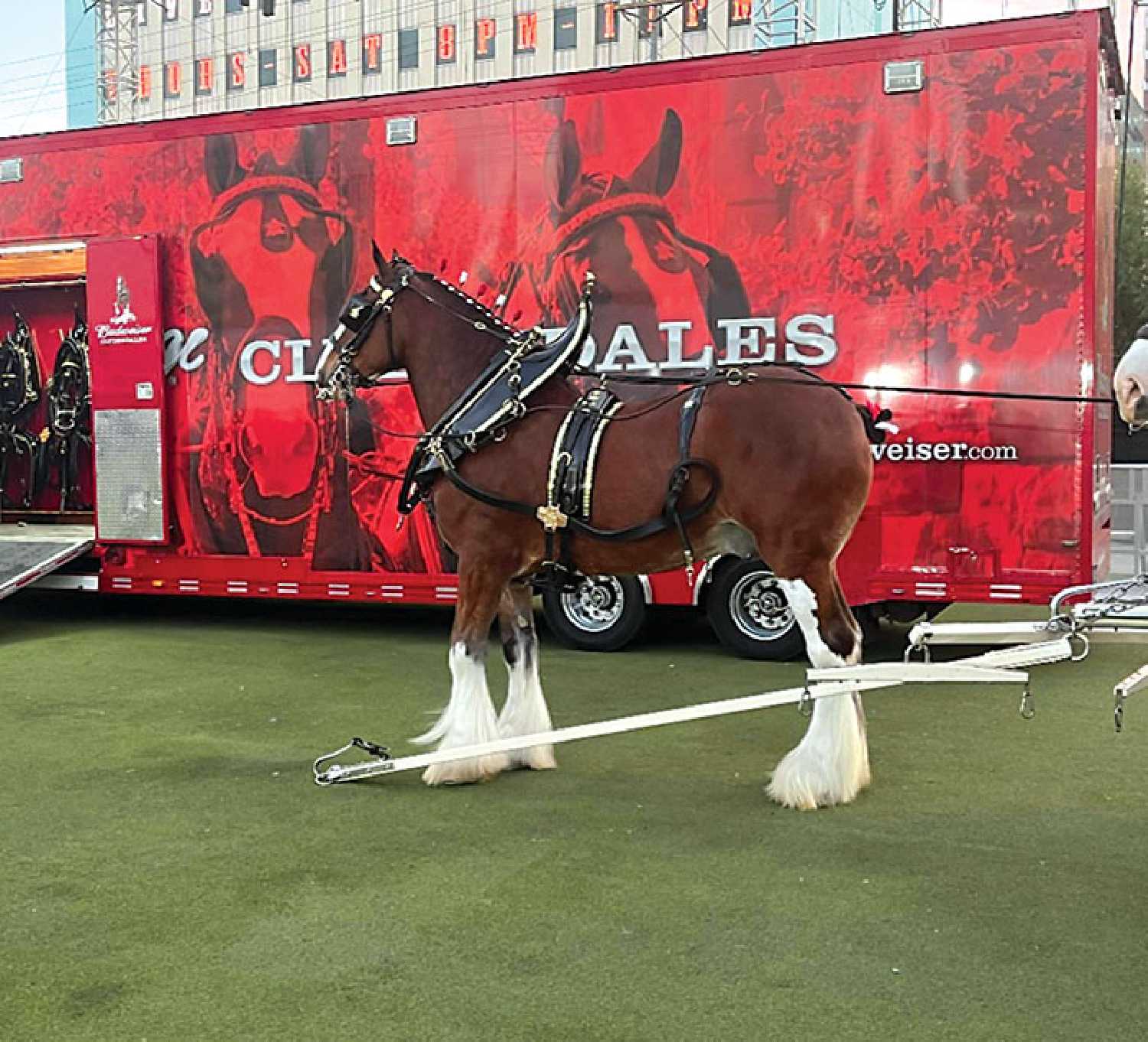

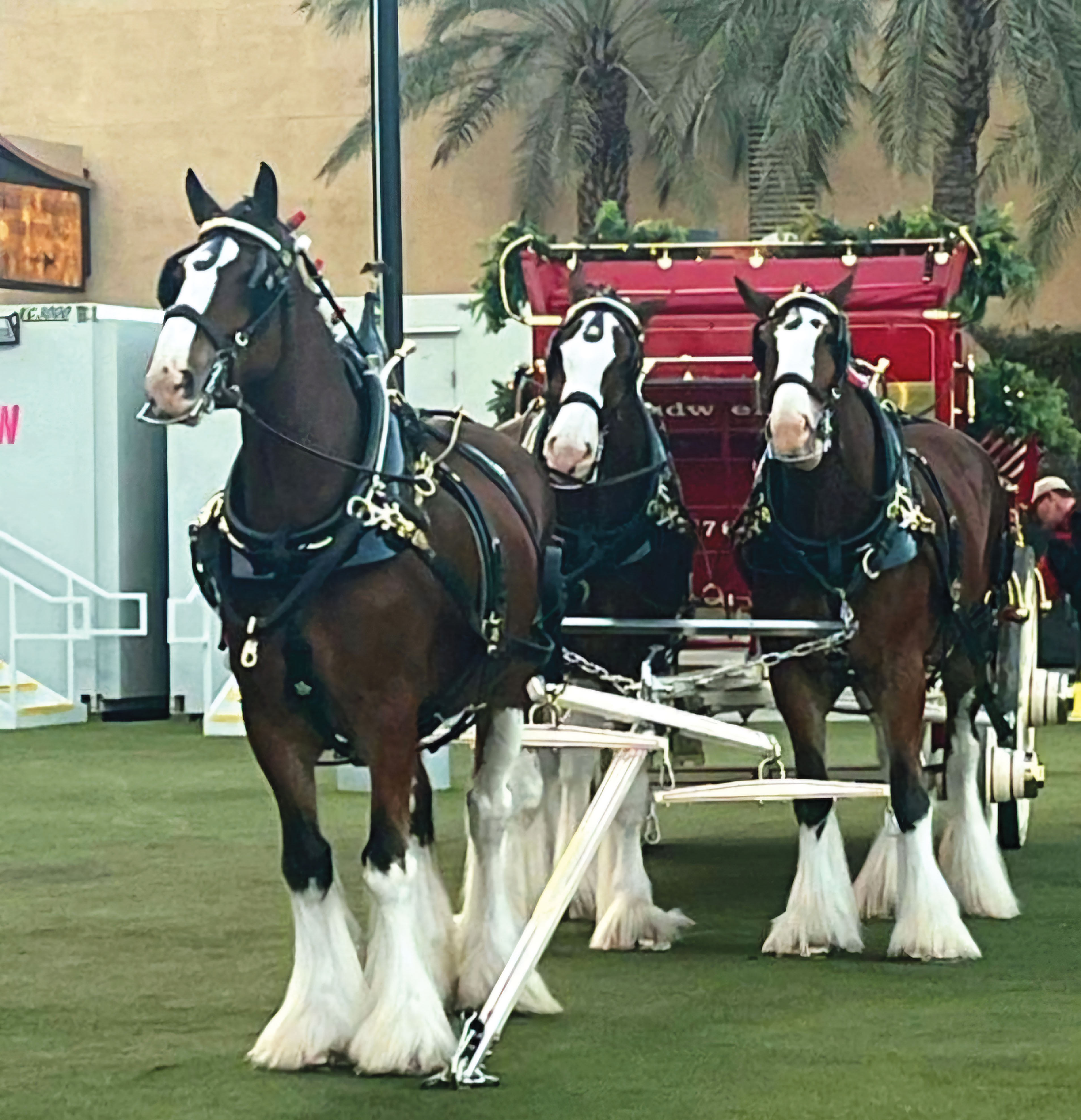
From a humble beginning on a small Saskatchewan horse farm has come great things. “Diesel” whose registered name is Clydesdale Creek’s Diesel, is a well-known Budweiser stallion who is the right front lead horse in the Budweiser eight-horse hitch. During Super Bowl 2026 in February, it was Diesel in the lead of that Budweiser team.
Diesel is one of three famous Budweiser Clydesdale horses born and raised at the Szumutku farm just north of Stockholm, Sask. The Szumutkus—Delvin and Louise—can be rightly proud of this horse who was born with a love of showing off. Budweiser Clydes have to meet strict physical standards, and as part of a hitch team, these iconic horses travel to parades and brewery events and have been part of the Super Bowl ads since 1986.
“Budweiser horses need to be photogenic and they need to exude self-esteem,” Szumutku told the World-Spectator in a recent interview at his kitchen table. “That’s why Diesel is the front right lead horse on the team,” he explains.
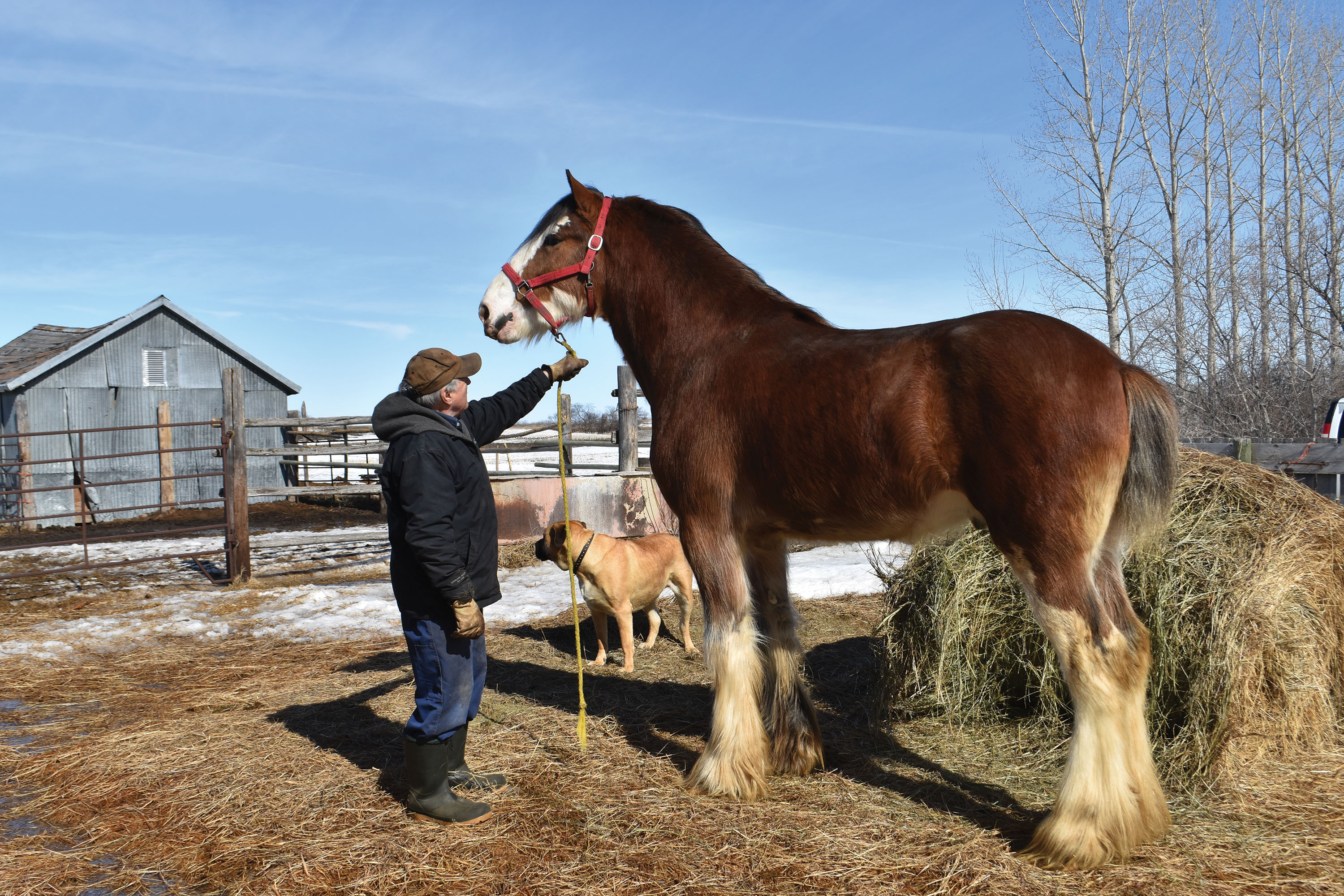
The front right lead is sort of the ‘top spot’ on a team like this, and Diesel—tall, self-confident and show-worthy—fills the role effortlessly. He even made the December spot on last year’s Budweiser calendar. These gentle giants are tall and muscular and the long, silky hair that covers their lower legs and hooves (leg feathers) and their high leg action are legendary.
Diesel—with his red-brown body and black mane and tail, four white socks and a white blaze on his face—has taken part in many events as a member of the current Budweiser hitch. It is a truly remarkable sight to watch a Clydesdale hitch team at work!
Horses like Diesel are only used for a few years because the pounding on pavement is hard on their legs. Diesel, like other horses on the team, are eventually placed on a two-year ‘last term,’ and when that second year ends, the horse is retired. Diesel however, is on his second go-around of a two-year ‘last term.’ This very much speaks to not only how regal he looks and how beautiful he is, but how he has carried that love of ‘showing off’ that he was born with to the level he is at today, one that has earned him such a place in Budweiser history.
How does a horse breeder know he has a winner on his hands? And when does he know he has a horse destined for great things?
“When he knows, he just knows,” said Louise Szumutku of her husband on his ability to spot a showring-quality Clydesdale. What’s most amazing, though, is that he knows when that horse is just a baby. Not weeks or months into a young colt’s life, but pretty much right away.
Szumutku and his wife have never shied away from hard work on their farm north of their beloved little community, and it’s easy to see that Delvin not only has a gift when it comes to knowing a winner when he sees one, but a gift in preparing a Clyde for show. Over their years on the farm, they have grown crops and raised cattle and horses, but their true love are their Clydes.
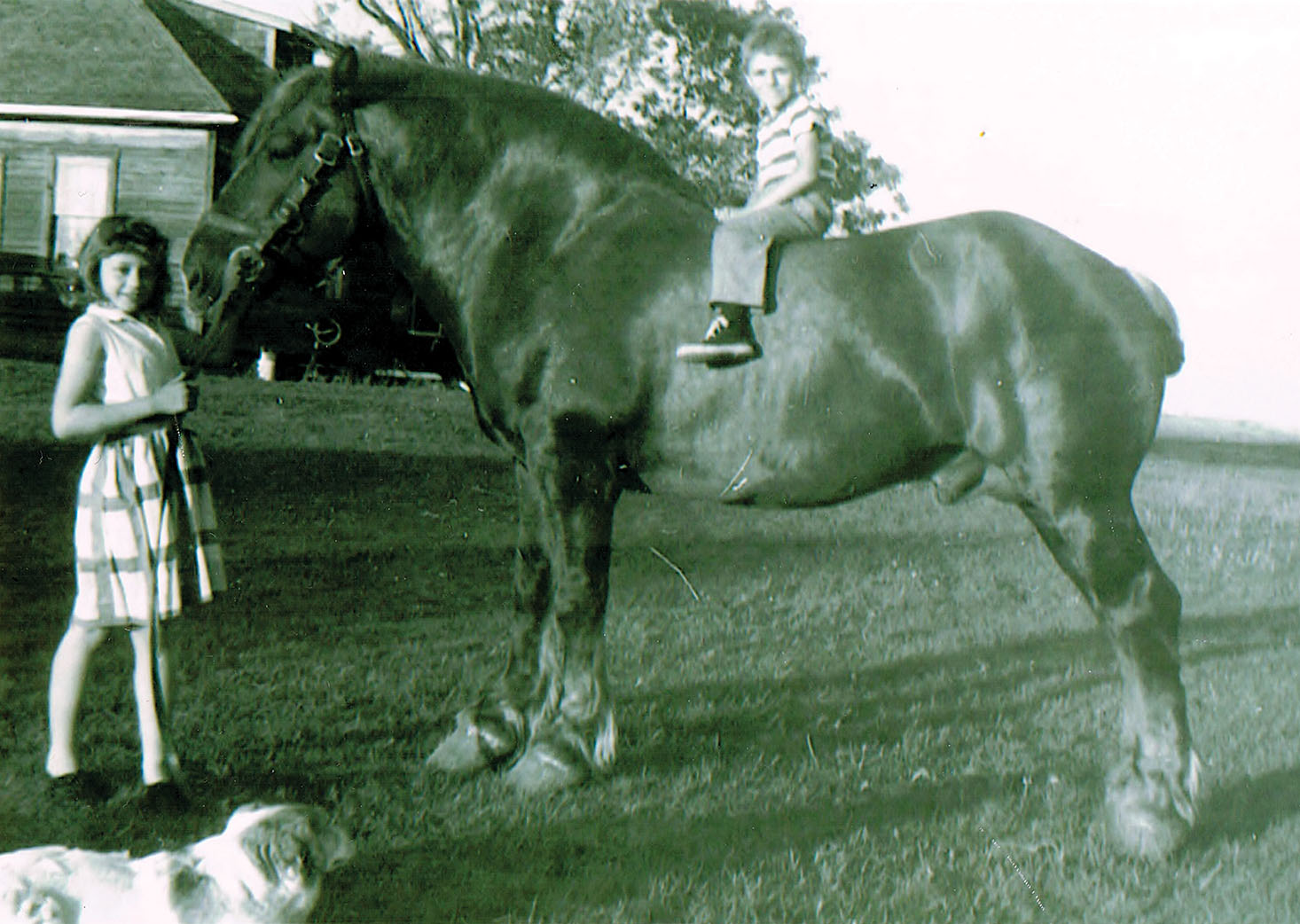
Szumutku’s lifelong love of horses—big horses that is—began almost from the beginning of his life. Now 74 years old, Szumutku says his dad always had Belgian draft horses, but as just a kid. Szumutku was more smitten with Clydesdale horses though they had none.
“I loved the Clydesdales,” Szumutku said in an interview at his Stockholm-area farm. “Their legs, their white hair—I loved that about them. And I finally bought one when I was 12 years old.”
Of course, it wasn’t quite that simple. There was some work to be done to raise the money to be able to make such a purchase, and work he did, digging holes and putting telephone poles into the holes in the 1960s. These weren’t just any holes, they were four feet deep, dug with a shovel and re-dug when he hit a rock. The pay was $4 a hole. He dug holes from Stockholm north for two miles to the home farm where he still lives. And that money meant he could buy a Clydesdale, a five-year-old mare, not even broke.
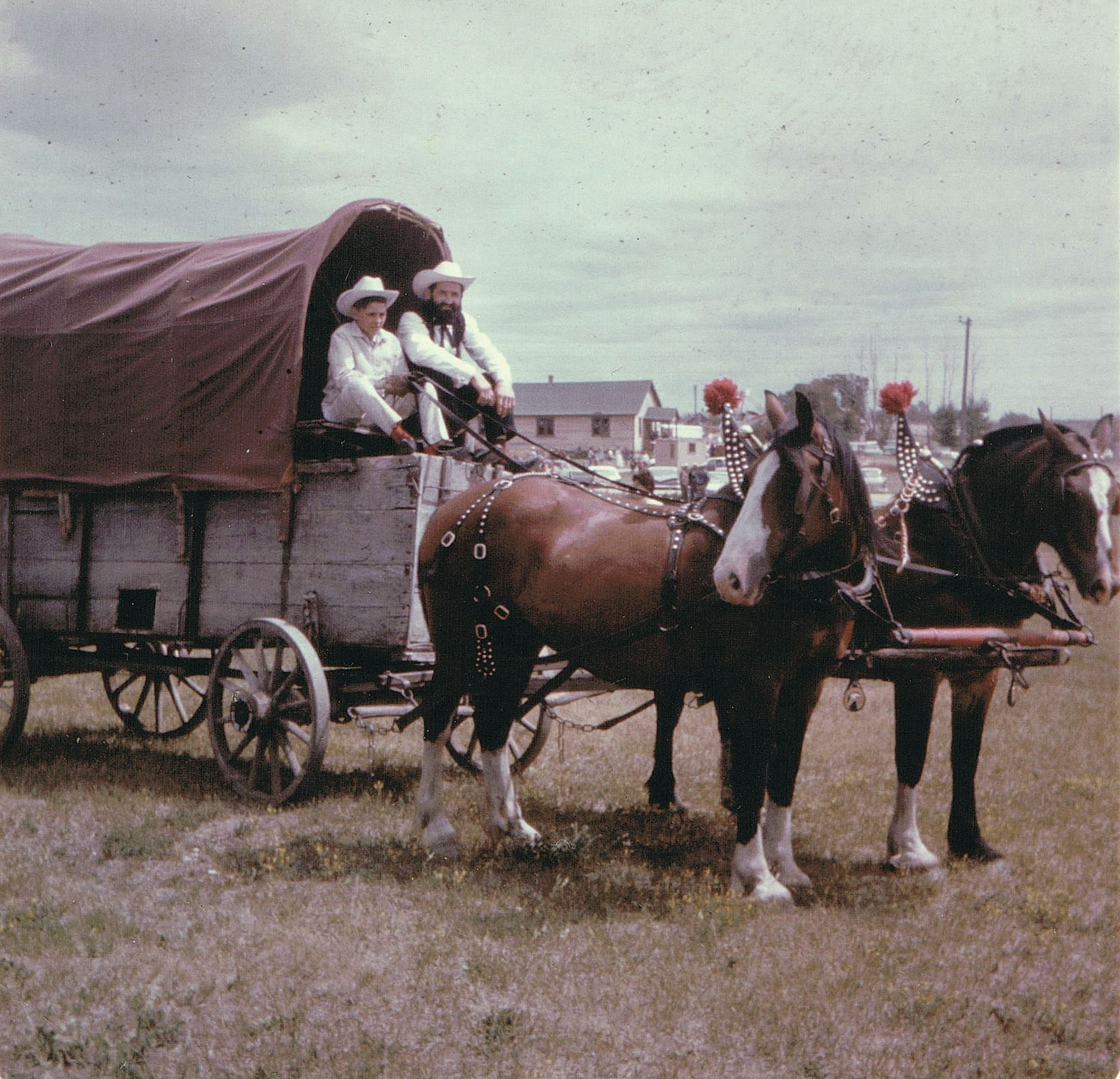
When his dad purchased a Clydesdale stallion in the ‘60s, that was the beginning of a near lifetime of not only raising Clydesdales but showing them as well. And preparing these massive horses would become Szumutku’s passion because showing them was one thing, but making them show-ready was where his greatest skill shone through.
“We (my dad and I) showed horses at the Royal in Toronto in the mid-60’s,” Szumutku said of those early years when he was just 13 and 14 years old. “The federal government provided funding to the provincial government who sponsored one train car of cattle and one train car of horses to go to Toronto to the Royal,” Szumutku explained. “You had to apply to the Royal and then qualify to be able to have your horse go by train.”
Though there was no cost for the horses to go by train, the owners had to pay other expenses and supply the feed for their animals. Nineteen horses was the maximum number in a train car and the owners rode along in the car to care for them. It took about three days to get there and in order to have the horses ready for show, this meant leaving Saskatchewan about 10 days before the show began. Once they disembarked in Toronto in the middle of the night, they then had to walk their animals to the grounds—the Horse Palace as it was called.
“It was an incredible sound,” Szumutku said as he remembered the sound of the horseshoes hitting the ground as the horses were led the three-block distance to the Horse Palace. Not only was the sound remarkable, but the spectators who lined the streets made quite an impression, especially as it was about three in the morning. People were enamoured with these big, beautiful horses that can weigh upward of 2,000 pounds or more.
Young Szumutku, along with his dad and others who had traveled to Toronto with their horses, stayed in dorms that were provided for them and everyone chipped money in for groceries so they could make their own meals while they were in the city.
One cold, wintery November after showing in Toronto, Szumutku, about 15 at the time, boarded the train with his horse, carrying with him a can of soup and some wieners to eat along the way. The cold temperatures not only froze the barrel of water meant for the horses, but also his food. With no heat on the train, he decided to use the one-burner hot plate they had to warm up his soup.
“I opened my can of soup with a hoof trimmer,” Szumutku said, “then stuck the frozen wieners in the can of soup and put it on the hot plate. Three hours later, I checked and the soup was just lukewarm and I thought I would give it just half an hour more because hot soup would really warm me up.”
Unfortunately for Szumutku, he inadvertently spilled his soup and his warm meal ended up on the floor of the train car. “I could have cried,” he said of that moment. “I took a horse blanket and threw it over me to stay warm.”
Szumutku and his dad also showed horses locally and one summer Szumutku’s dad came home from an appointment with his heart specialist with a grand idea.
Szumutku had come in from summerfallowing a field at around nine in the evening and his dad had five horses tied up in the barn. His dad’s idea was to show at the Yorkton Exhibition which was to start the following day.
Szumutku looked at the horses. None were even remotely ready for show. They were dirty with burrs stuck to their hair, and he thought, “We haven’t even registered for the show, but if they let us in, I will go.” And as luck would have it, they knew who to get in touch with and got registered, albeit late.
“I arrived in Yorkton at midnight,” recalls Szumutku, “and I worked all night to clean that horse up, shoes on, washed up, trimmed up.” All his work paid off with that last minute decision to show because the horse he ended up taking won the Supreme Grand Champion award. Sadly, it would be his dad’s last horse show.
“Jacob won everywhere,” Szumutku continued as he talked about this stallion. “He had incredible confidence. He was good with kids, he was cocky, he was proud.
“A fellow in the States where we were showing wanted to buy Jacob but was offering me $10,000 less than another horse this man had bought and so I said no,” Szumutku said. By the time they got Jacob back home from the U.S., the guy was on the phone still wanting to buy him and so the Szumutkus did agree to the sale, at their asking price, plus the cost of shipping him to the U.S. “Jacob was the Corvette of horses,” Szumutku went on to say. “He put us on the map.”
Today, as Szumutku still works with his Clydes in the barn not far from his house, it’s obvious he knows exactly what he is doing, but more than that, it is obvious that he has a deep love and respect for these animals. Szumutku is careful to note that these animals are not pets and they are not treated as pets.
His passion for the Clydesdale breed can be seen in his continued interest in the National Clydesdale Association where today he is the President and still travels to Toronto to attend meetings. Three years ago, he was asked to judge a horse show in South Africa, something he really enjoyed. While there they asked him to set up a breeding program. Judging, Szumutku learned, requires a careful eye and the realization that none of the horses are ever perfect. Once he learned that, he explained, he was able to judge.
As for Diesel, one of the most famous Budweiser Clydes, the media today has had a big impact on him being as well-known as he is, at least in comparison to two other Budweiser Clydes that came from the Szumutku farm. Regardless, it’s been a remarkable journey, not just for the Szumutkus, but for Diesel himself!
Tweet






-SM.jpg)


 sm.jpg)